
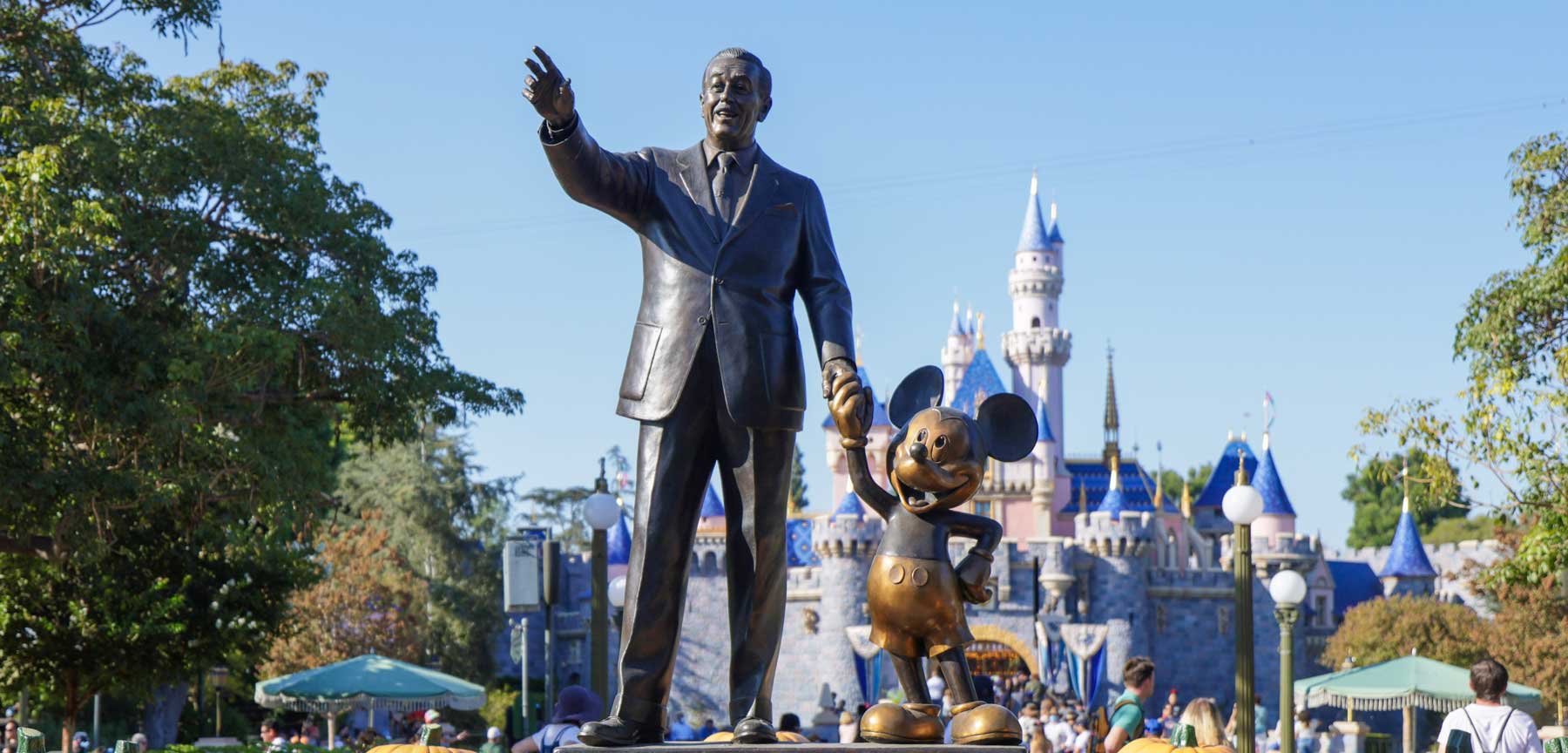
Walt Disney went bankrupt. Twice.
He lost his first successful character to a distributor who played him.
He mortgaged everything for a mouse nobody wanted.
And when he finally had momentum, he bet it all on a feature-length cartoon that Hollywood called “Disney’s Folly.”
This isn’t the sanitized story Disney tells today. This is the blood, sweat, and borderline-insane conviction it took to build one of the most powerful brands in history.
If you’re a founder facing rejection, running out of cash, or wondering if you’re crazy for pushing forward, this story is for you.
Kansas City: The First Crash

- Walt Disney was 21 and already bankrupt.
His Kansas City animation studio, Laugh-O-Gram Films, had collapsed. He’d borrowed money from everyone who’d lend it. His landlord was hunting him for back rent. He was living in the office, bathing at Union Station, eating cold beans from a can.

By Walt Disney
Most 21-year-olds would’ve packed it in. Gone home. Found a job.
Disney borrowed $500 from his uncle and bought a one-way ticket to Hollywood.
No connections. No safety net. Just a half-finished reel of animation mixing live action with cartoons—a technique nobody was doing yet.
The Setup: He built a camera stand from dry-goods boxes and lumber scraps he found in his Uncle Robert’s garage. He shot sample footage. Then he started cold-calling distributors back East.
Letter after letter. Rejection after rejection.
Then Margaret Winkler, a New York distributor, bit. She offered $1,500 per cartoon for a series called Alice in Cartoonland.
Disney was in business. Barely.
His brother Roy, who was recovering from tuberculosis and living on a $85/month government check, scraped together enough to help fund the first cartoons.
Founder Lesson:
When Disney had nothing, he didn’t wait for permission. He built the tools himself, created proof of concept, and hustled until someone said yes. That’s not luck—that’s refusing to let “no resources” mean “no start.”
The Oswald Betrayal: Losing Everything You Built
By 1927, Disney had something real: Oswald the Lucky Rabbit.

The character was a hit. The cartoons were distributed by Universal. Money was coming in. Disney hired more animators, built a small team, invested in better equipment.
Then he went to New York to negotiate a better rate with his distributor.
What happened next is every founder’s nightmare.
Charles Mintz, the distributor handling Oswald, didn’t just refuse a raise, he lowered the offer. And when Disney pushed back, Mintz revealed he’d secretly hired away most of Disney’s animators and owned the rights to Oswald under the contract Disney had signed.
By Morgan Litho Co. – Self Scan from David Bossert’s photo
Disney didn’t own his own character.
Mintz basically said: take the lower rate or walk away with nothing.
Most founders would’ve taken the deal. Kept the paychecks coming. Played it safe.
Disney walked.
The train ride back to California is legend. Disney sat in his seat, gutted, furious, broke and started sketching. By the time that train pulled into LA, he had a new character.
A mouse. Named Mortimer.
His wife hated the name. She suggested Mickey instead.
Founder Lesson:
Disney learned the hard way: if you don’t own your IP, you don’t own your business. That mistake shaped everything he built after. He never made that deal again. Control meant everything, even if it meant starting from zero.
Steamboat Willie: The $1,200 Disaster That Changed Everything
Mickey Mouse wasn’t an instant hit.
Disney shopped the first two Mickey cartoons—silent films—to distributors. Nobody wanted them. Cartoons were a dime a dozen. Why would anyone care about a mouse?
But Disney had seen The Jazz Singer—the first movie with synchronized sound. It was revolutionary. And Disney realized: sound was the edge.
So in 1928, he decided to create the first cartoon with synchronized sound: Steamboat Willie.
The problem? He had no money. And recording sound was insanely expensive.
Disney hired a 30-piece orchestra for $7 an hour. Three hours of recording. That’s $210 per session—roughly $3,700 in today’s money.
The sound engineer couldn’t sync it properly. After multiple failed takes, Disney had burned through $1,200 with nothing usable.
He wired his brother Roy: “Need another $1,200. Immediately.”
Roy sold Walt’s car. Sold furniture. Scraped together cash however he could.
They cut the orchestra from 30 musicians down to 16. Fired two sound technicians. Disney took over, conducting the orchestra himself while watching the film, counting beats obsessively until the timing was perfect.
It worked.
When Steamboat Willie premiered at the Colony Theatre in New York on November 18, 1928, the audience went berserk. They’d never seen anything like it. Mickey whistling. Music perfectly timed to action. Magic.
Disney had his hit. Finally.
Founder Lesson:
Disney bet everything—again—on an unproven idea. He didn’t have the budget, but he had the vision. When the first attempt failed, he didn’t quit. He cut costs ruthlessly, took control himself, and executed until it worked. That’s founder grit.

By Walt Disney / Ub Iwerks – Original poster
Snow White: Disney’s $1.5 Million Gamble During the Depression
By 1934, Mickey Mouse was a phenomenon. Disney had money coming in, a real studio, a team. He could’ve played it safe, kept churning out 7-minute shorts, and made a comfortable living.
Instead, he announced he was making a feature-length animated film.
Industry reaction? Mockery.
Hollywood insiders called it “Disney’s Folly.” A 90-minute cartoon? Impossible. Kids wouldn’t sit still. Adults wouldn’t take it seriously. It would bankrupt him.
Disney didn’t care. He’d seen a French theater run 5-6 Disney shorts back-to-back to packed crowds. He knew there was an appetite for something bigger.
He chose Snow White and the Seven Dwarfs.
The budget was supposed to be $250,000. It spiraled to $1.5 million.
To put that in perspective: typical cartoon shorts cost a few thousand dollars to make. Disney was betting 500 times that amount—during the Great Depression—on something nobody believed would work.
The Bank of America threatened to shut down production mid-project. Disney had to show them unfinished reels to prove the film was worth completing.
He mortgaged his house. He borrowed against everything.
Animators worked 12-hour days, six days a week. Disney spent half his time in the “Sweatbox”—a small projection room where he obsessively reviewed every scene, demanding revisions, redoing sequences that didn’t hit the emotional beats he wanted.
One scene—Snow White fleeing through the forest—was redone repeatedly until the terror felt real.
December 21, 1937. The premiere at the Carthay Circle Theatre.
Critics wept. Grown men cried during the film. The audience gave a standing ovation.
Snow White became the highest-grossing film of 1938. It made $8 million in its initial release—the equivalent of over $175 million today.
Disney’s gamble paid off. Massively.

Founder Lesson:
Disney didn’t just dream big, he executed big. When everyone said it was impossible, he built systems (the Sweatbox, the training program for animators, the storyboarding process) to make the impossible happen. Vision without execution is fantasy. Disney built the machine to deliver the dream.
The Philosophy: Dream, Believe, Dare, Do
Disney’s success wasn’t random. It was systematic.
Peter Drucker said: “When you see a successful business, someone once made a courageous decision.”
Disney made dozens of them. And they all followed the same pattern:
1. DREAM – beyond the boundaries of today
2. BELIEVE – in sound values
3. DARE – to make a difference
4. DO – execute the vision
Disney didn’t just dream. He believed those dreams were achievable, dared to risk everything, and then did the brutal work to make them real.
When Oswald was stolen: Dream (new character), Believe (ownership matters), Dare (start over), Do (create Mickey).
When sound was new: Dream (first sound cartoon), Believe (it’s the future), Dare (spend everything on recording), Do (conduct the orchestra yourself).
When features seemed impossible: Dream (90-minute film), Believe (audiences will love it), Dare ($1.5M investment), Do (build the systems to create it).
This wasn’t optimism. It was obsession.
The Real Cost: What Disney Sacrificed
Let’s be clear: Disney’s obsession had a price.
He was notoriously difficult to work with. He demanded perfection. He could be brutal in critiques. Animators called the Sweatbox “torture” because Disney would tear apart their work without mercy.
His personal finances were a mess for decades. In 1956, after building a global empire, Disney had $3,000 in his personal bank account. A few months later it had grown to $6,000. That’s it.
He funneled every dollar back into the business. Into the dream.
He wasn’t trying to get rich. He was trying to build something that mattered.
Quote: “All I know about money is that I have to have it to do things. I don’t get any fun out of possessing it.”
That’s the founder mentality. Money is fuel, not the goal.
The Post-War Bet: Disneyland
By the 1950s, Disney had conquered animation. He’d won Oscars. He was producing nature documentaries and live-action films.
Then he decided to build a theme park.
Again, everyone said he was crazy.
Amusement parks in the 1950s were dirty, dangerous, poorly run carnivals. Why would Disney, an animation studio, get into that business?
Disney’s answer: Because nobody was doing it right.
He wanted a place where families could experience magic together. Where every detail mattered. Where employees were “cast members” performing in a “show,” not workers running rides.
Banks refused to lend him money. They thought it was insane.
So Disney did what he always did: he figured it out anyway.
He started a TV show, Disneyland, which gave him a platform to promote the park and generated cash to fund construction. He sold the rights to his old films. He mortgaged his life insurance policy.
Disneyland opened July 17, 1955. It was a disaster on opening day—rides broke, food ran out, plumbers were still installing toilets when guests arrived.

But Disney fixed it. Obsessively. Within weeks, the park ran like clockwork.
By the end of the first year, Disneyland had welcomed 3.6 million guests.
Founder Lesson:
Disney’s greatest skill wasn’t drawing, it was seeing what didn’t exist yet and building it anyway. He didn’t ask for permission from investors or banks. He found a way. Always.
What Founders Can Learn From Disney
1. Ownership is everything
Disney lost Oswald because he didn’t control the IP. Never again. Own your core assets or you’re building someone else’s company.
2. Bet on yourself when nobody else will
Disney mortgaged his house for Snow White. Sold his car for Steamboat Willie. Borrowed against his life insurance for Disneyland. When you believe, you go all in.
3. Execution beats ideas
Everyone dreams. Disney built systems to execute those dreams: storyboarding, the Sweatbox, training schools for animators. Process enabled magic.
4. Failure is tuition
Disney went bankrupt twice before 25. Each failure taught him something. Kansas City taught him to build with nothing. Oswald taught him to own his IP. Those lessons built the empire.
5. Obsession is a feature, not a bug
Disney’s relentless perfectionism drove people crazy. But it also created Steamboat Willie, Snow White, and Disneyland. If you want legendary results, you need legendary commitment.
The Uncomfortable Truth
Disney’s story isn’t inspirational in the Instagram sense.
He didn’t “follow his passion” into easy success.
He didn’t “manifest” his dreams through positive thinking.
He didn’t have work-life balance or self-care Sundays.
He went bankrupt, got betrayed, risked everything multiple times, and worked like a man possessed.
That’s what it actually takes.
Not always. Not for everyone. But for the founders building empires that reshape culture? Yeah. Usually.
The question is: Are you willing to pay that price?
Disney was. And that’s why 100 years later, we’re still talking about him.
Going Deeper
Want more on how Disney operated day-to-day? Check out:
- Hall of Fame: Walt Disney – The Man Who Dreamed in Technicolor – Quick biography COMING SOON
- Walt Disney’s Creative Process: How the Sweatbox Built Perfection – Executive Edge article COMING SOON
- Disney’s Game-Changing Innovations That Created Modern Entertainment – Innovations article COMING SOON
For founders facing their own battles:
Disney’s philosophy wasn’t unique to him. Other legendary founders followed similar patterns. Explore:
- Phil Knight: How Nike Was Built on Obsession and Rejection
- Elon Musk: Channeling Musk-Level Obsession From PayPal to Mars
- Richard Branson’s Maverick Moves
Questions to Ask Yourself:
- What am I building that’s worth risking everything for?
- Do I own my core IP, or am I building on someone else’s platform?
- When was the last time I made a “Disney-level” bet on my vision?
- Am I executing or just dreaming?
- What would I do if I lost everything tomorrow, would I start again?
Actions to Take:
- Audit your ownership. List every critical asset in your business. Who owns it? If the answer isn’t “me,” fix it.
- Build your execution system. Disney had the Sweatbox. What’s your quality control mechanism?
- Make one “Disney bet.” What’s the move you’ve been too scared to make? This week, take one step toward it.
- Study your failures. Write down your biggest business failure. What did it teach you? How can you apply that lesson?
- Channel obsession constructively. Pick your Snow White, the one project worth going all-in on. Everything else is noise.
The Last Word
Walt Disney died in 1966, planning Disney World from a hospital bed. He never saw it completed.
But he’d built something bigger than himself. A philosophy. A system. A way of seeing the world that still drives the company today.
Dream. Believe. Dare. Do.
That’s not a cute motto. It’s a founder operating system.
If you’re serious about building something that lasts, you know what to do.
Now go execute.


